

For millions of people, pets are considered part of the family. Unfortunately, companion animals such as dogs and cats age rapidly and have relatively short life expectancies. Research in the biology of aging has made tremendous strides over the past several years, with a few interventions having been found capable of slowing aging and extending healthy lifespan by 20-40% in small mammals such as mice and rats. These same interventions may be able to provide dogs and cats with three to five or more years of additional healthy, youthful life.
This symposium will bring together experts in canine health with experts in the biology of aging to share their latest research discoveries and discuss how to best understand and tackle aging in companion animals. Our primary goal is to accelerate translation of this science to promote healthy longevity not just in people, but also in our pets.
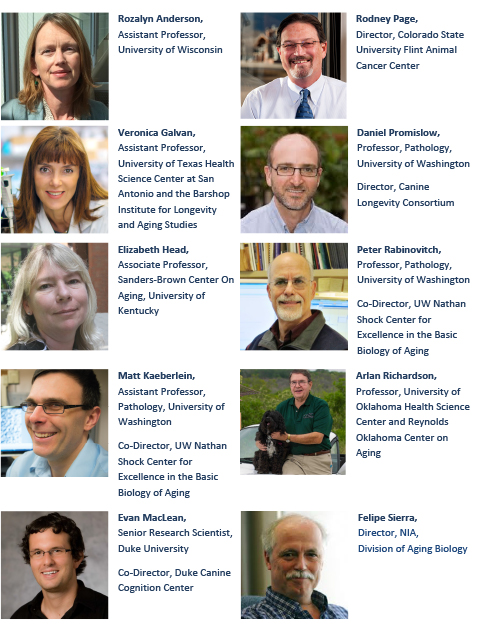
Symposium Schedule
OCTOBER 28: SCIENTIFIC SESSION BEGINS (COLLEGE ROOM)
8:30-9 AM Continental Breakfast, Chancellor Room
9-9:10 AM Introductory remarks
9:10-9:40 AM Felipe Sierra, The Geroscience Initiative
9:40-10:20 AM Daniel Promislow, Canine aging: Can old dogs teach us new tricks?
10:20-11:00 AM Arlan Richardson, Rapamycin: The first longevity drug?
11:00-11:20 AM Coffee Break, Chancellor Room
11:20 AM-12 PM Rod Page, Translational exposure and aging opportunities: establishing a lifetime, longitudinal canine cohort study
12-12:40 PM Roz Anderson, Aging and delayed aging by caloric restriction
12:40-2 PM Lunch, Chancellor Room
2-2:40 PM Elizabeth Head, Lifestyle modifications and healthy brain aging: Insights from canine studies
2:40-3:20 PM Evan MacLean, Spontaneous problem-solving games as a window into the (aging) dog’s mind
3:20-3:40 PM Coffee Break, Chancellor Room
3:40-4:20 PM Veronica Galvan, TOR in Brain Aging and Age-Associated Neurological Disease
4:20-5:30 PM Working Groups: Healthy aging interventions in companion animals: opportunities and pitfalls
OCTOBER 29 SCIENTIFIC SESSION DAY 2 (COLLEGE ROOM)
8:30-9 AM Continental Breakfast, Chancellor Room
9:00-9:40 AM Peter Rabinovitch, Cardiac aging in man, pets, and mice
9:40-10:20 AM Matt Kaeberlein, mTOR, mitochondria, and aging
10:30-11 AM Coffee Break, Chancellor Room
11 AM-12 PM Summary and discussion of working group reports
12-1 PM Box Lunch and ongoing discussion, Chancellor Room
Participants depart